Given yesterday's historic occasion, it seems only appropriate to make mention of The White House blog where you can read all about the inauguration, Obama's economic agenda, his plans regarding energy and the environment and the ways in which he intends to address other issues of the day. It's also a very nicely designed site.
When the time allowed, I had been following the blog at Change, the Obama Team's previous site. Obama may not only have been the first Presidential candidate to embrace the web but also the first to embrace Web 2.0. At Change, Visitors were able to submit ideas via the Citizen's Briefing Book - these ideas were published on pages where others could vote to move them up or down a scale and leave comments.
They also use plenty of discussion and video to liven up the site. Can you imagine such a thing happening if McCain had gotten in? Even if it had, can you imagine people engaging with it? It will be interesting to see how much of a difference it'll make. The Change site has officially closed now but you still see the previous postings by going to this site.
In the meantime, I've been thinking about a change as well - albeit of a smaller kind. Some people have been saying they can't see my blog so I'm thinking of moving from Blogger over to Edublogs where all the other learning technologists seem to be. Still, if I decide to move, I'll post a notice here. So, for now, keep watching this space.
In an effort to get back into blogging, I've backposted up some notes from the Durham Conference. Day One is here and Day Two is here.
And for a more personal touch, here are some pictures of my niece Grace - born on 1st December and about the size of an egg - in varying states of wobbliness with different members of my family. Anyone who wants to hazard a guess as to who's who can leave comments below...
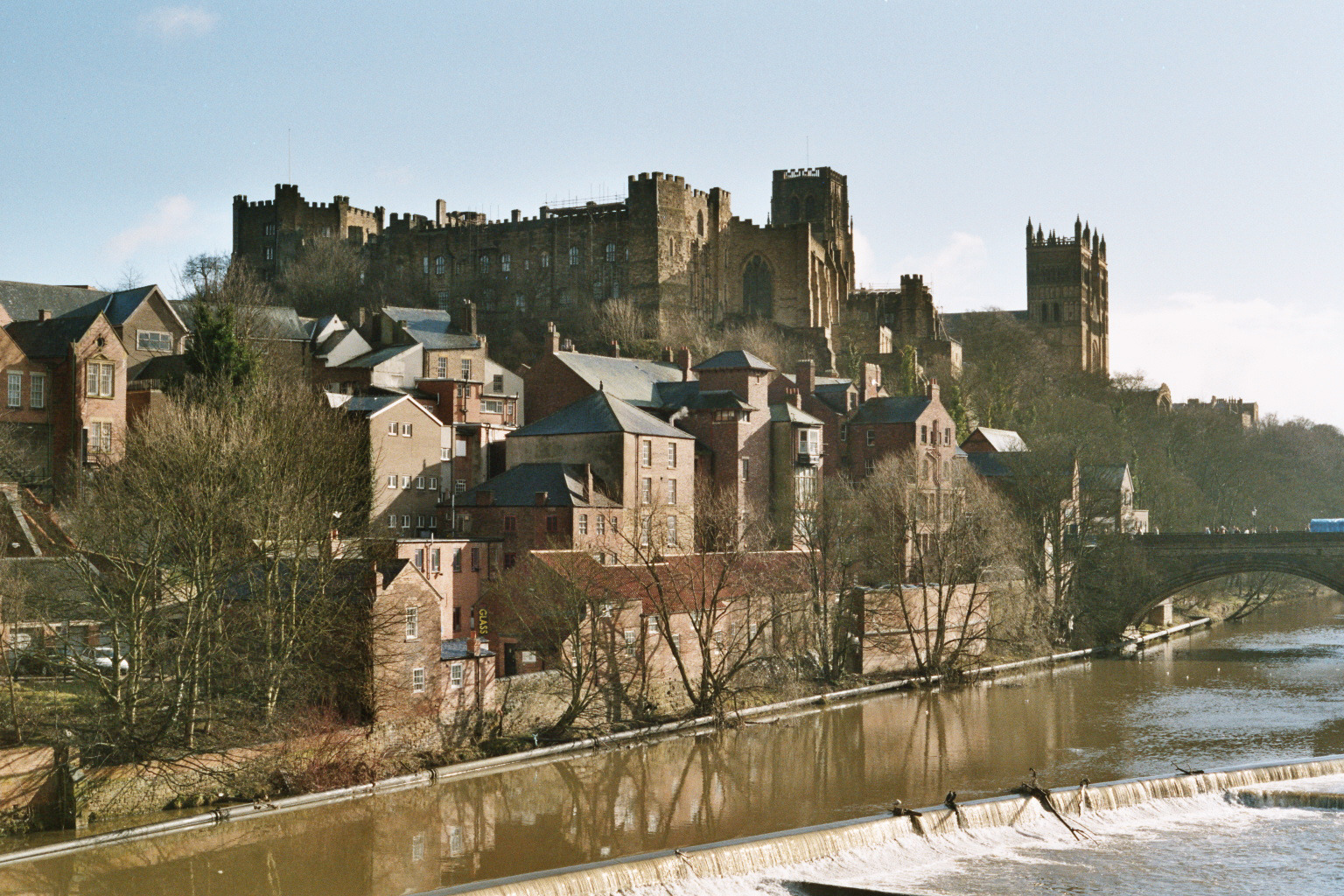
No doubt some sore heads in the first presentation this morning after a three-course meal in Durham Castle, with lots of wine, followed by a trip to the nearby Undercroft bar... Still as this presentation was the usual Roadmap spiel from Blackboard it barely mattered. We still don't have a definite date for the release of Version 9 and while I'm sure the information they gave about Project NG was useful for some, I'm also sure I wasn't the only one who'd heard all this before.
They did mention that Blackboard was being re-branded and that three themes would be evident in upcoming versions: Blackboard Learn, Blackboard Transact and Blackboard Connect.
Following that, a forward-thinking talk from Sophie Paluch (College of Law), Kate Reader (Bristol) and Zak Mensah (TASI - soon changing it's name to JISC Digital Media) about mobile technologies in Higher Education. One thing I took away from this presentation was how much mobile technology has moved since it first came about - and how quicky. Sophie showed an advert on YouTube, and while I haven't been able to find the same one, this clip should give you an idea of the kind of progress that's been made.
Later I saw a presentation from Ralph Holland (Tyneside) and Merv Stapleton (City of Sunderland) on their comparison of e-portfolio tools and their usage in different (and sometimes novel) situations. One example Ralph gave of marines trying to maintain e-portfolios out at sea but being unable to due to lack of proper Internet access was particularly vivid. I would have liked to have seen more examples here but I spoke to Merv after the presentation and we're going to keep in touch and share experiences.
Lastly, we were treated to an inspiring final keynote from Paul Lowe; a very energetic speaker who runs an MA Photojournalism and Documentary course at the London College of Communication and has his own blog here. He talked about the course he runs, which recruits mid-career professionals and requires them to keep their own blogs for purposes of reflection. The talk itself was very inspiring and, as you'll probably notice from the slideshow I've embedded here, very visual - but the main thing I took away from it was that it didn't matter so much which tool his students practitioners were using but that how they used the tools to interact with one another that counted more.
Paul uses Blackboard but he barely mentioned it in his talk. And people on the course were allowed to use whatever blogging application they preferred. It seemed more important that they were paired up or put in groups so as to support each other during the reflective process (especially given that they were subject to a lot of criticism). Feedback was the crucial element here, I think.
Together with Andy's presentation the previous day, I came away determined to make more of an effort with my blog!
So another year, another conference at Durham for Blackboard Users... Except this year, one of the keynotes is a user of Moodle! If that doesn't give Blackboard cause for concern...
The title of this year's conference is "e-Learning: A Reality Check - Do We Practice What We Preach?" and Andy Ramsden from Bath kicked the official proceedings off with a really stimulating and entertaining talk on whether or not e-learning has lived up to its early promise. A lot of his slideshow was made interactive by the use of PRS, which turned out to be an effective way of passing the main question on to us.
After letting the audience decide which way he should steer the talk, he went on to give us an outline of Collis and Moonen's 4-E model. As I understand it the model looks at the drivers behind the adoption of a new technology or approach at an institution and then compares these with factors in the institutional environment to determine a threshold, past which those drivers must push if adoption is to be successful. The drivers looked at include Educational Effectiveness, Ease of Use, and Personal Engagement, while institutional factors are all clumped together in the Environmental category - and there we have our four E's!
Andy went on to explain what practical steps they are taking to make sure these drivers are in place and strong enough - such as doing fewer case studies, and working more with a project blog. I also liked the suggestion that members of the e-Learning Team sit in on actual lectures and get a sense of teaching styles in place as well as what technologies are being used! And his tip to make the time to blog is something I'm following up at this very moment...
This was a good start to an interesting day. There were quite a few presentations on e-portfolios (my own included) a couple of which sought to readdress the definition of an e-portfolio, presumably because the lack of tools that actually meet the requirements mean learning technologists are now seeking Web 2.0 solutions. (My colleague Robyn and I have done some work on this too.) Peninsula Medical College are using Learning Objects' Expo wiki tool on their Emily Blackboard system for example.
Tim Neumann from the Institute of Education outlined some scenarios in which the requirements of an e-portfolio were very different and the work he has done provided some kind of explanation as to why there isn't yet a killer app when it comes to e-portfolios.
One final handy tip from Andy Cree who teaches Business Ethics at Teesside Business School. He talked about his course and about he used video podcasts to direct students on his course to areas of the reading list that might normally be overlooked. The short infomercial type videos he produced seemed to be a simple but innovative way of getting students to engage with other points of view.
The tip here is how he provided visuals to his audio commentary on the books - by using a site called morgueFile (I think he called it PhotoMorgue but I couldn't find that so I'm assuming he was mistaken). It's a site where artists, professionals and amateur photographers and upload their photos for anyone to use for free -so if you're looking for some images to enhance a presentation, be sure to have a look!
Tuesday's voting was bound to lead to an historic election - the US would either have gotten its first African-American president or its first female vice-president. So I stayed up to see some of the results trickle in, which for the UK happened during the small hours of Wednesday morning.
The BBC's coverage seemed particularly shambolic, consisting of David Dimbleby trying to interview an ever-shifting panel of experts, insiders or opiniated wafflers but constantly interrupting what might have been interesting answers by updating those who had just joined the table as to what they were talking about and updating us with pointless commentary mostly on pictures of a sparse crowd of Republicans miserably shuffling around as if someone had just done something in their hat...
I didn't see it at the time having drifted well-off into sleep before the results were annouced but this botched interview with Gore Vidal was actually a highlight of this otherwise ridiculous coverage.
And what was particularly irksome was that they continually focused on the fact that then-Senator (now President-Elect) Obama is black. Dimbleby couldn't seem to get enough of this word, and most of his questions seemed to centre on this one fact, while the rest of the time was spent mocking Republicans they'd managed to timetable into their barely orchestrated game of musical chairs.
Sure, Obama's being black is a first but the BBC's unsubtle emphasis on this single fact overlooked the far more important fact that his campaign was for the most-part co-ordinated as a post-racial affair. More importantly still, this may be the first genuinely intelligent President that the U.S. have elected in at least eight years. Is the BBC's seeming inability to address these points down to the limits of televisual media, which can only ever hope to address what it thinks are populist questions in the time given?
Also a first, and here we get to why I'm ranting about it on this blog, is that Obama used the web as a crucial part of his campaign to appeal to a younger and potentially more diverse spectrum of voters. There's a podcast over at The Guardian - direct link here - which addresses this issue specifically. They talk to Andy Carvin, the NPR's social media expert who talks about how the use of the Web had practical applications beyond simple appeal to voters, namely:
Using social networking for politically like-minded people to meet up - resulting in an historic coalition of support for the Democrats
Ways of getting donations from all over - meaning that Obama was able to turn down public funding, so confident was he of getting enough donations from the electorate at large
Andy also talks about the way people have used sites like YouTube to keep up-to-date (I know I have) - and the ways sites like these have a way of catching people out. Someone says something untoward and it can go viral and be seen world-over. And yet that's the thing that's made Obama truly remarkable throughout this campaign - is that he has been potentially subject to more media scrutiny than any other presidential candidate in history and, save a few slip-ups (his comment about certain voters clinging to "religions and guns" for example), has still managed to get most of the popular vote and an electoral college landslide.
And how? There's been much use of words like "grassroots" and "movement" in trying to describe the support behind Obama in the past year, which I think conceals the fact that what we've actually seen has been a highly-organised, controlled campaign. There may have been elements of the Democratic support that could be described as "grassroots" but this was still largely a top-down affair, remarkable because it managed to involve so many young volunteers.
What remains to be seen is whether the people that met using these tools will maintain their connections and keep politically engaged. This will be crucial over the next 100 days or so as Obama attempts to face down a worsening economic situation and meets with pressure from corporate interests to break or ease up on some of his campaign promises. If Obama's "grassroots" supporters can stay in touch and, more crucially, organise then we might see what can be properly called a movement.
Anyone been following the US elections? As a serial drama, it's been fascinating and I wouldn't be surprised if a few weeks after the inauguration, someone options a film of the whole thing.
So, if you're interested, here's Five Thirty Eight - a blog which compiles multiple poll findings from the States and tracks each of the candidate's popularity. The site gets it's name from the number of electors in the electoral college. It's frequently updated and should make interesting reading over the next couple of weeks.
At the time of writing, Democrats should have a lot to be happy about but of course there's only one poll that really counts - and that one's taking place on November 4th.
(I should prob'ly stop calling this feature "blog of the week" if I can't actually keep the blog up-to-date. Perhaps, I'll just refer to it as Recommended Blog in future...)
Another article, again from The Guardian, in which Richard Stallman - the founder of GNU - warns readers that "cloud computing" is a trap.
Cloud computing is where users decide to store their mail or files (such as images, documents, spreadsheets, slideshows, etc) online instead on their hard drive or on a memory stick that belongs to them.
I guess cloud computing and its downsides as they are argued in the article are the flip-side to Web 2.0.
If I'm being honest (and I do try) I haven't come across this phrase before - it sounds like another fashionable buzz-term to me. But even though I've not heard the saying, I've thought about this kind of thing. If we define Web 2.0 as online sites that allow the users to generate its content, thus creating new open spaces for users to congregate, share and store information then inevitably, with the increase in Web 2.0 use we're going to see more users moving their content online - and therefore off their own machines.
I suppose there's a certain naïveté about total Web 2.0 advocates in that while these spaces are public-domain, they're not publically-owned.
However, Stallman says: "If you use a proprietary program or somebody else's web server, you're defenceless." Perhaps, the following question will suggest a little naïveté on my part but where are we going to store and share this stuff if we can't afford our own web server?
 Given yesterday's historic occasion, it seems only appropriate to make mention of The White House blog where you can read all about the inauguration, Obama's economic agenda, his plans regarding energy and the environment and the ways in which he intends to address other issues of the day. It's also a very nicely designed site.




 Posts
Posts


